March 25th, 2014

Adult patients who seek orthodontic treatment usually fall into one of two camps: those who did not undergo orthodontic treatment as a child or those who had braces at one point but stopped wearing retainers for one reason or another.
At Shipley Orthodontics, we are happy to offer a variety of treatment options to straighten our patients’ teeth. Dr. Thomas Shipley and our team believe you’re never too old to straighten your teeth. And we have many adult patients who are currently undergoing treatment. In fact, did you know that roughly 30 percent of all orthodontic patients these days are adults?
Invisalign® is a great treatment option for adults. The Invisalign aligners are easy to wear and are not visible to most people. Plus, Invisalign's clear aligners are removable, so there are no restrictions on what you can eat during treatment. When considering Invisalign, we tell adults to determine if they can be diligent about wearing the aligners at all times and make them part of their lifestyle for the duration of treatment.
If you have been thinking about obtaining a beautiful smile, please give us a call at our convenient Peoria, AZ office for an initial consultation. Dr. Thomas Shipley and our team welcome children, teens, and adults alike. Call us today for an appointment!
March 18th, 2014

Two-phase orthodontic treatment involves two separate and distinct periods that your child receives orthodontic treatment. It allows your son or daughter to begin early treatment of bite and jaw problems, in order to reduce the dental issues he or she experiences later on.
Two-phase orthodontic treatment with Dr. Thomas Shipley can improve how well the second phase of the treatment works and helps to make room for permanent teeth. Overall, two-phase treatment helps to position the teeth and the jaw for an attractive profile. Our team at Shipley Orthodontics recommends that you bring your child to our Peoria, AZ office at the age of seven or eight, so that Dr. Thomas Shipley can determine if early (Phase-One) treatment is necessary.
Phase-One
Phase-One orthodontic treatment is known as early treatment. It begins shortly after your child’s first orthodontic examination, usually around age eight or nine. The main goal of Phase-One orthodontic treatment is to help make room for permanent teeth, which reduces crooked teeth as a result of overcrowding. It treats the jaw and bite growth, and issues like crossbite or underbite. This can reduce the need for your child to undergo extractions.
Phase-Two
Phase-Two orthodontic treatment is when braces are placed on the upper and/or lower teeth. The purpose is not just to correct spaces or misaligned teeth, but also to correct overbite or underbite concerns. Phase-Two usually begins around age 11 or 12, and the braces are worn for an average of two to three years, depending on your child’s unique needs. Some children have fewer issues and wear braces for little more than a year, while others need them for up to four years.
Signs your child needs two-phase orthodontic treatment
If your child exhibits the following signs, he or she may be a good candidate for two-phase orthodontic treatment:
- Losing baby teeth early, before five years of age
- Problems with biting or chewing
- Sucking the thumb after age five
- Evidence of a crossbite, where the teeth don’t come together when opening or closing of the mouth
- Teeth are crowded at age seven or eight
- Protruding teeth on the top or bottom
Not all children need to have early treatment, but if your child shows any of these signs, you should bring him or her to us for an evaluation at Shipley Orthodontics.
March 11th, 2014

On March 17, everyone has a little Irish in them. St. Patrick’s Day is a joyous celebration of Irish heritage. The holiday originated as a commemoration of Saint Patrick, who brought Christianity to Ireland. The saint arrived in Ireland in 432 and earned the reputation of a champion of Irish Christianity. March 17th, the day of St. Patrick’s death, has been commemorated by the Irish for over 1,000 years. St. Patrick’s Day is still observed as a religious feast day by several Christian denominations, but it is better known in the public imagination as a rich celebration of Irish culture.
St. Patrick’s Day has been an official public holiday in Ireland since 1903. Each year, the Irish celebrate with a several-day festival that includes theater performances, music, fireworks, and festive parades. The celebration is also a public holiday in Northern Ireland, Montserrat, and Newfoundland and Labrador. In other parts of the world with heavy Irish populations, it is an unofficial celebration of Irish heritage. Parts of Great Britain, Canada, Argentina, South Korea, Switzerland, New Zealand, the United States, and Australia commemorate the holiday each year. Typical celebrations in these countries include drinking green beer, wearing green, eating traditional Irish foods, parades, and shamrock decorations.
Many people, Irish and non-Irish alike, take part in the “wearing of the green” on St. Patrick’s Day. In fact, the color originally associated with Saint Patrick was blue. His use of shamrocks to explain the Holy Trinity to the Irish made the green clover emblematic of the holiday, leading to the traditional green attire worn by thousands on St. Patrick’s Day. Other little-known facts about St. Patrick’s Day include the following:
- Each year, the United States and Ireland face off in a rugby competition called the “St. Patrick’s Day Test.”
- Montreal celebrates the holiday with an annual parade, which has been held each year since 1824. The Montreal city flag even features a shamrock in its corner, as a nod to its Irish heritage.
- The Guinness World Records named St. Patrick’s Day the “Friendliest Day of the Year.”
- Along with Valentine’s Day, St. Patrick’s Day is one of the most widely celebrated saint’s day in the world.
No matter your cultural heritage, St. Patrick’s Day is a great time to let loose and celebrate your inner Irish-ness! Don your greenest attire and exclaim “Erin go Bragh!” (Ireland forever!) to everyone you meet. From Dr. Thomas Shipley - have a great St. Paddy’s day!
March 4th, 2014
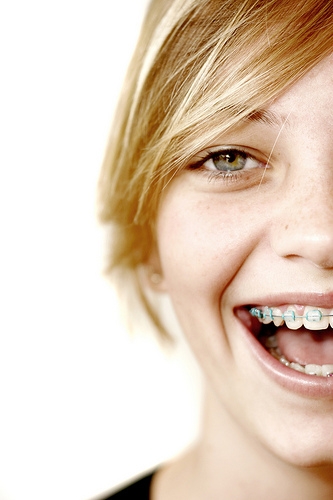
Everyone wants a naturally aligned and beautiful smile, and it is no secret that orthodontic braces from Shipley Orthodontics can help deliver one. However, there are greater benefits to wearing braces than just having straight teeth. You’ll gain many oral health benefits in addition to the cosmetic ones.
Tooth Decay and Gum Disease
Crooked or crowded teeth may overlap each other and create tight spaces in between. These can make it very difficult to brush and floss effectively, allowing bacteria and plaque to build up, and eventually leading to tooth decay and gum disease. With orthodontic treatment, your teeth will become properly aligned and spaced, which allows for more effective brushing.
Difficulties with Speech
Your teeth play an essential role in speech. When they are out of line or lean too far forward or backward, this can affect your speaking patterns, and possibly cause embarrassment and frustration. Braces can readjust the positioning of the teeth to allow for clearer, more professional speech.
Bone Erosion
Bone and gum tissues begin to erode when there are no teeth to support. This is also true for poorly aligned teeth that leave gaps and spaces or place too much pressure on the jawbone due to a bad bite. With braces, the bones and tissues are less likely to erode and can continue to support the teeth in their new alignment.
Digestion
Your teeth play an important role in digestion. Before food ever enters your stomach, it has been partially digested by the teeth. If teeth are severely out of line, however, they may not play their role in breaking down food as effectively as they should. With braces, your teeth will be straightened into optimal alignment for eating and chewing.
Dr. Thomas Shipley and staff will be happy to answer any of your questions about your orthodontic treatment. Visit us in Peoria, AZ today!
 Website Powered by Sesame 24-7™