May 20th, 2014

Memorial Day is not only a federal holiday in the United States, but it is a day of observance and remembrance of those who died in service. Originally known as Decoration Day, this solemn day has been marked on calendars since the end of the American Civil War as a day to commemorate both the Confederate and Union soldiers who fought and died in the war.
Marking the graves of fallen soldiers with flowers, wreaths, or other tokens has been practiced throughout history, but it wasn't until the mark of the end of the Civil War that a special day was decided upon as the one to spend in remembrance. By 1890, every state in the country was observing Decoration Day. It wasn't until 1967 when the name formally changed from Decoration Day to Memorial Day, in order to encompass all fallen American soldiers in all wars and conflicts. In June of 1968, Congress moved the official date of Memorial Day to the last Monday in May in order to create a three day weekend.
Today, while there is certainly an air of remembrance on Memorial Day, it has become more a day of spending time with family, friends, and other loved ones. This day is also heralded as the start of summer, with many schools finishing for the year around this time. Our team at Shipley Orthodontics remembers it as a day to take solace and remembered those lost.
Traditional observances of Memorial Day are still held, and they often involve raising the American Flag then lowering it to a half-staff position until noon, and then raising it once again to its full height afterwards. The flag is lowered to remember those who've lost their lives while in service to their country, and then it is raised to signify our willingness to not let their sacrifice be in vain.
From community parades in the Peoria, AZ area, backyard cook-outs, and fireworks to formal ceremonies, Memorial Day is commemorated in many different ways. No matter how you choose to spend this day, take a moment to remember those who've lost their lives in an effort to preserve our freedom.
May 13th, 2014

Most of us aren’t born with a red carpet smile. And if you’ve thought about straightening your teeth but are apprehensive about doing so with traditional orthodontic treatment, Dr. Thomas Shipley and our team at Shipley Orthodontics want you to know there is another option – Invisalign®!
Invisalign is an ideal solution for most adults looking for a less noticeable way to achieve a better smile. In fact, Invisalign has increasingly become a very popular choice for adults looking for a more comfortable, convenient and cosmetically-appealing treatment for straightening their teeth.
Our team at Shipley Orthodontics is proud to offer Invisalign, which uses a series of invisible, removable and comfortable aligners that no one can tell you’re wearing, which allows you to smile more during treatment, as well as after. Not only are the aligners invisible, they are also removable, so you can eat and drink what you want; brushing and flossing is easier with Invisalign than with traditional braces.
Invisalign’s aligners are also comfortable, with no metal to cause mouth abrasions during your treatment. And no metal and wires usually means you spend less time at our office getting adjustments. Invisalign also allows you to view your own virtual treatment plan when you start, so you can see how your straight teeth will look when your treatment is complete!
A consultation with Dr. Thomas Shipley can determine if Invisalign is right for you. We encourage you to give us a call at our friendly Peoria, AZ office if you’re interested in learning more about Invisalign or if you are ready to visit us for an initial consultation! We look forward to seeing you!
May 6th, 2014

"Motherhood: All love begins and ends there." - Robert Browning
We would like to take this moment to thank all the great moms out there for being so great during their child’s visits to Shipley Orthodontics. Whether it’s driving their kids to regularly scheduled appointments or for “being there” while their child is treatment, the moms who come to our office are all stellar individuals, so Dr. Thomas Shipley and our entire staff would like you to know that we appreciate you all!
Happy Mother’s Day and enjoy your special day!
April 29th, 2014
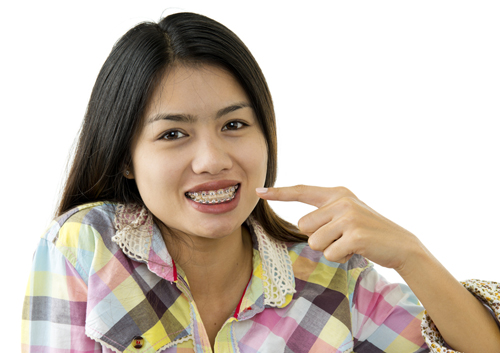
Parents of a certain age will no doubt remember the teen comedies of the 1980s. These movies typically included a character so wired up with orthodontic apparatus (elaborate metal braces, rubber bands, a mountain of headgear) that he or she looked like some sort of electrical machinery. In recent years, the technological advancements in braces have not only made this character a thing of the past, but if your child needs braces to fix crooked teeth, you no longer need to worry about him or her being called “brace face” with a “tin grin.”
Traditional braces use a system of archwires, brackets, and rubber bands to straighten and realign crooked teeth. Self-ligating braces that Dr. Thomas Shipley and our team at Shipley Orthodontics provide, by contrast, use specialized clips to hold the archwires in place instead of rubber bands. But what makes self-ligating braces so good?
- Self-ligating braces make it easier to keep your teeth clean because there are no rubber bands. Rubber bands collect food particles, and this can lead to an increase in plaque and decay. Have you ever tried to brush for two minutes with a mouth full of rubber bands? It’s tricky. Self-ligating braces improve oral health.
- Self-ligating braces are smaller and less noticeable than conventional braces. Most kids are self-conscious about how they look (flashback to those 1980s comedies), so braces that are subtle and less conspicuous are a huge draw.
- Self-ligating braces are more comfortable than traditional braces. Less pressure and friction are placed on the tooth. These types of braces also need fewer alterations and adjustments, so chances are you will save money by making fewer appointments with our office.
- Self-ligating braces move crooked teeth into place more quickly than conventional braces. In other words, you’re going to wear self-ligating braces for a shorter amount of time than traditional braces.
- Orthodontic work can be expensive. Self-ligating braces, however, cost about the same amount of money as traditional braces.
Dr. Thomas Shipley and our team are proud to offer self-ligating braces as an alternative to traditional metal braces. Ask our team if they are right for you by giving us a call at our Peoria, AZ office!
 Website Powered by Sesame 24-7™