
Our Blog

What is early intervention?

July 11th, 2013
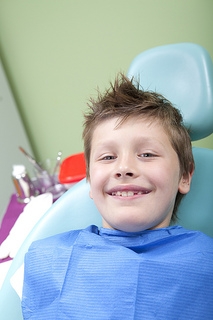
Many developing orthodontic problems can be intercepted and corrected if diagnosed and treated at an early age. Dr. Thomas Shipley and our team at Shipley Orthodontics recommend children have their first orthodontic evaluation no later than age seven, or younger if the front four permanent teeth have replaced the baby teeth. Early treatment, also known as interceptive treatment or Phase I treatment, provides both timely detection of problems and greater opportunity for more effective treatment. Early intervention guides growth and development, preventing serious problems later.

If your child is showing these signs, it may be time to think about early orthodontic treatment:

  • Early or late loss of baby teeth (your child should typically start losing teeth around age five or six, and will have all their permanent teeth in around age 12 to 13)
  • Difficulty chewing and/or biting
  • Mouth breathing
  • Sucking his or her thumb
  • Speech impediment
  • Protruding teeth (the top teeth and the bottom teeth extend away from each other)
  • Crowded front teeth
  • Teeth that don't come together in a normal manner or even at all

Early intervention will greatly reduce the severity of your child’s case, and therefore reduce the length of treatment time and cost for a second phase of treatment when all of his or her permanent teeth have erupted. An evaluation at our Peoria, AZ office will determine if your child’s dental and skeletal growth is proceeding properly or if interceptive treatment is needed. Many times, a more severe problem can be corrected using sophisticated removable appliances instead of traditional orthodontic treatment.

To schedule a consultation for your child to visit with Dr. Thomas Shipley, please give us a call! We will provide your child with an initial exam, and discuss with you the best steps to take toward caring for your child's smile.


Happy Fourth of July!

July 4th, 2013

Happy Independence Day from Dr. Thomas Shipley and team! The Fourth of July celebrations in America may have changed a lot over the years, but there is no doubt that we Americans love to celebrate the anniversary of our country's independence! Today we're devoting the Shipley Orthodontics! blog to some fun facts about the Fourth!

  • My, how we have grown! This year the United States Census Bureau estimates that our country has 313.9 million residents celebrating the Fourth of July this year, but back in 1776 there were just 2.5 million members of the country.
  • Our country loves to show how proud that we are of our independence. Did you know that there are 31 United States places with the word “Liberty” in their names? The state of Iowa actually has four towns with the word Liberty in the name: Libertyville, New Liberty, North Liberty, and West Liberty.
  • The United States loves Fourth of July food! It is expected that around 150 million hot dogs are eaten on the Fourth each year. One of the Fourth's most popular sides, potato salad, goes just perfectly with the hotdogs and hamburgers that are standard Fourth of July fare. Some people choose potato chips instead, but we wouldn't have such a plethora of potatoes if not for the prodigious production of the states of Idaho and Washington -- they provide about half of all the potatoes in the United States today!
  • Americans love celebrating the Fourth outdoors: About 74 million Americans fire up their BBQ grill every Fourth of July.
  • The Chinese contribution: Did you know that Americans have spent more than $211 million on fireworks that were imported from China?

No matter how your family chooses to celebrate the Fourth, stay safe, take precautions, and don't forget to brush after your fabulous Fourth feast!

Thanks to Invisalign®, you can have a perfect smile without metal wires or brackets!

June 27th, 2013

At Shipley Orthodontics, we know that image is everything. For many people, the thought of having metal brackets and wires attached to their teeth for two or more years may be more than enough to reconsider orthodontic treatment.

If you’ve been considering straightening your teeth but are apprehensive about metal wires and brackets getting in the way of your smile, Invisalign treatment at Shipley Orthodontics may be a great solution.Using special software, we look at the current positioning of your teeth and compare it to the way your teeth should look. Then, as your treatment begins, Invisalign straightens teeth through a series of clear, custom-fit removable aligners, and does so in a way that is discreet and hardly noticeable.

If you have questions about Invisalign, or would like to find out if you are a candidate for Invisalign treatment at our Peoria, AZ office, please give us a call to schedule an initial consultation with Dr. Thomas Shipley.

How Braces Can Work at Any Age

June 20th, 2013

Are you an adult who is considering getting braces? Perhaps you’ve had them before, but over the years that dental work has been reversed. Or maybe you’ve never had any orthodontic work done, but are considering braces for the first time. In either case, Shipley Orthodontics can help you enjoy straighter teeth, an improved bite, and a more beautiful smile. If you are considering getting braces, here is what you need to know about adult orthodontic work from Dr. Thomas Shipley.

Can Braces Work For Adults?

Absolutely! Braces work for just about anyone. However, there are several different types of braces, and not all of them may work for you. Different types of orthodontic treatments include:

  • Ceramic braces
  • Metal braces
  • Self-ligating brackets
  • Lingual brackets (braces behind the teeth)
  • Invisible braces
  • Rubber bands for bite correction
  • Headgear and other appliances

By scheduling a consultation, we can determine which treatment or combination of treatments would be best for your specific needs.

How Do I Get Started?

Getting braces can be a little bit daunting. At first glance, the process may appear expensive and time-consuming. However, if you take it step by step, getting braces can be a simple and relatively pain-free experience. Here are the first steps you need to take to get on the road to straight teeth:

First, you need information. If you are nervous about getting braces, or are having trouble getting started, learning more about the process can help ease your mind. Here are a few sample questions to ask:

  • What kind of braces do you recommend for my teeth?
  • How long will the treatment take?
  • How often will I need to come in for adjustments?
  • What is the total cost of the treatment? Do you accept insurance? Will you require the full amount up front, or do you have payment plans?

Asking these types of questions will help you understand what to expect during the entire process, which can aid your decision on the proper course of action.

The next step is to complete any prerequisite treatment. During your first meeting with Dr. Thomas Shipley, we’ll need to take some X-rays and molds of your teeth, and then help you determine an appropriate treatment plan. Recommendations may include some preliminary dental work before you get your braces, which can be an important step in making sure your orthodontic treatments are effective.

Once you have completed these steps, you are ready to get started! After you’ve chosen a treatment plan and undergone any necessary prerequisite dental work, you’ll be able to get your braces. Just like that, you’re on your way to a better smile! If you’d like to get started right away, call our Peoria, AZ location today!

Top