We’re not talking about caring for major appliances here—the refrigerators, dishwashers, and washing machines which make our lives easier. We’re talking about some much smaller appliances which produce major personal results—the dental appliances which help create healthy, attractive smiles.
A dental appliance is simply any device which helps promote dental health. And while that definition is awfully broad, you still might be surprised at the many types of dental work which qualify! Today, we look at “fixed” appliances. These devices and restorations stay in the mouth, unlike removeable appliances like aligners and retainers. How do they work for us, and how do we give them the care they need to work most effectively?
Space Maintainers
If you’ve lost a baby tooth prematurely, your orthodontist or dentist might recommend a space maintainer. A space maintainer holds the space open for your adult tooth to arrive in its proper spot by preventing the surrounding teeth from shifting out of position. Space maintainers can protect tooth alignment and reduce the need for later orthodontic treatment.
Traditional Braces
Traditional braces make use of brackets, arch wires, bands, and ligatures in a wide variety of materials and styles to align teeth properly and help correct malocclusions. Braces normally stay in place for 18-24 months, with more time as needed for more complex malocclusions.
Functional Appliances
Functional appliances like the palatal expander and the Herbst® appliance are used to guide jaw development during the treatment of malocclusions, helping patients achieve their best smiles while the jaw and facial bones are still growing. Because these appliances stay in the mouth until this stage of treatment is complete, caring for them can present some day-to-day challenges.
Fillings and Crowns
It might seem odd, but fillings and crowns are also considered dental appliances because they protect tooth structure. It’s especially important to take care of your teeth while you’re in orthodontic treatment, because interrupting your treatment to repair a damaged filling or crown might delay your regular orthodontic schedule.
So many appliances, helping us protect and improve our dental health in so many ways! Here are some steps you can take to make sure these appliances perform at their best:
- Clean carefully—and more often
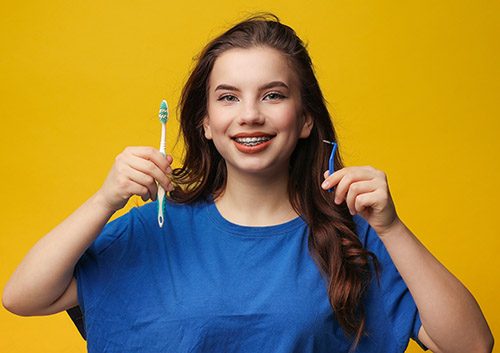
You might need to brush and floss after every meal and snack to prevent plaque buildup and to keep food particles from sticking to braces and functional appliances. Dr. Thomas Shipley can recommend your optimal cleaning schedule.
- Explore new tools
Interproximal brushes, flosses designed for braces, and water flossers can make cleaning teeth and appliances easier and more effective. Talk to your orthodontic and dental teams to learn the best tools and techniques for your specific needs.
- Eat with your appliances in mind
Sticky, chewy, hard, and crunchy foods are not on the menu when you have a fixed appliance! Sticky and chewy foods like caramels can damage appliances and are difficult to clean from appliances and enamel. Hard foods require biting pressure which can damage appliances—and your fillings and teeth! Crunchy foods can leave irritating little particles stuck in and under appliances. Dr. Thomas Shipley has all the details on choosing foods which are good for your teeth and your orthodontics.
- Stick to your orthodontic routine
Wearing appliances as recommended is the only way to make sure you finish your treatment on schedule. Keeping up with your appointments and adjustments keeps you on track and allows the team at Shipley Orthodontics to discover any problems with your appliances.
- Watch out for destructive habits
Habits which aren’t good for your teeth and gums are also not good for your appliances. Nail biting, chewing on pencils or other objects, using teeth as tools to open bags or bottle caps, crunching on ice, and other behaviors which can damage tooth enamel can also damage fillings, crowns, braces, and other appliances.
- Don’t ignore potential problems
Call your orthodontic team in Peoria, AZ at once if your appliance is causing you pain or shows any signs of damage. See your dentist if a filling or crown is uncomfortable, loose, or damaged.
It doesn’t take a lot of daily care and effort to make sure your appliances are working their best—and the reward is a future of beautiful, healthy smiles!
 Website Powered by Sesame 24-7™